
Votre panier est vide.
Excursion au lever du soleil sur le Merapi : le récit sincère d'un novice sur ce à quoi s'attendre
Personne ne vous parle du froid. On vous parle de la jeep, des champs de lave, de la vue sur les cratères à l'aube. Vous…
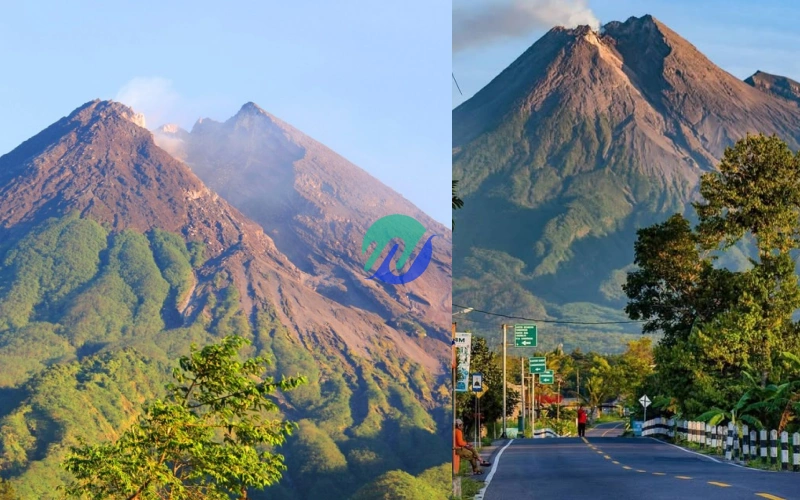

Nobody tells you about the cold. You read about the jeep, the lava fields, the crater views at dawn. You see the photographs, warm orange light hitting the stupas of the volcano as the sky turns colors behind it.
What the photographs don’t communicate is that you’ll be standing on those slopes at 5 AM in a t-shirt wondering why you didn’t bring a jacket, because it’s 18 degrees up there and the jeep has no roof. That’s the honest version of the Merapi sunrise tour. Here’s the rest of it.
Most operators ask for a 3:30 to 4:00 AM hotel pickup. That means going to bed by 9 or 10 PM if you want to function as a human being at the viewpoints.
First-timers almost universally underestimate this and go to bed too late, which is why Merapi sunrise reviews split into two camps: people who loved it, and people who were too tired to fully appreciate it. Set the alarm. Go to bed early. The mountain doesn’t care about your dinner plans, haha.
Pickup from central Yogyakarta is usually around 3:30 AM. The city is quiet at that hour, which is its own kind of interesting. The drive north to Kaliurang takes 45 to 60 minutes depending on where you’re staying, and most of it is dark highway with occasional warung signs and motorbikes.
At Kaliurang, you transfer to the jeep. The vehicle is an open-top 4×4, usually an old Willys or Land Rover, driven by a local guide who grew up near the mountain. You’ll get a helmet and possibly a dust mask. Then you head up.
The road to the first viewpoints is where you encounter the bumpiness that every review mentions. The lava rock paths that make up the jeep trails are genuinely rough, and the open vehicle amplifies every jolt. Hold on to the roll bar. If you have a bad back, consider a shorter route or a newer vehicle.
Arriving at the main viewpoints around 5:00 to 5:30 AM, in the dark or in early grey light, the first impression is usually the cold and the wind. Then the sky starts to change.
On a clear day, which is more reliable in dry season (May to October), the sequence goes like this: dark grey gives way to deep blue, then a thin line of orange appears above the ridge, and Merapi’s cone becomes visible as a silhouette against it.
As the light strengthens, the details emerge: the crater, the upper slopes, the texture of the lava fields in the new light. If Merapi is active, there may be a plume of volcanic gas drifting from the summit.
The whole thing takes about 20 to 30 minutes from first light to full sunrise. It is genuinely beautiful, and the photos you’ll take in that window will be the ones you keep.
On a cloudy day, the mountain disappears entirely. This happens, especially outside dry season. Experienced guides know which alternative viewpoints give you the best chance of catching a gap in the clouds, but there are no guarantees.
Travelers who’ve done the tour in cloud cover consistently say the jeep experience itself was still worth it even without the summit view.
The tour doesn’t end at the viewpoints. Once the light is established, the jeep moves through the main stops: Museum Sisa Hartaku, Alien Rock, Bunker Kaliadem.
These stops hit differently in the early morning quiet than they would in midday heat with tour groups around. The museum especially, with its melted household objects and photographs of the 2010 eruption, has a particular weight when you’re the only people there.
The river crossing, usually the Kali Kuning, comes later in the route. The jeep descends into the dry volcanic riverbed and crosses it, sometimes through shallow water.
This is the moment most travelers describe as the highlight of the physical experience, partly because it’s genuinely fun and partly because standing in a volcanic river with Merapi above you makes the whole landscape feel real in a way the viewpoints don’t quite achieve.
The most common complaint in reviews is weather, specifically the sunrise being obscured. This is not a complaint about the tour, it’s a complaint about Indonesia.
Cloud cover is part of the deal and no operator can control it. If clear skies matter to you more than anything else, go in June, July, or August and check the local forecast the night before.
The second most common comment is about the bumpiness. Every review mentions it. It is genuinely bumpy. This is not hyperbole. If you’re the type of traveler who expects smooth road surfaces, recalibrate before you board.
The third thing people don’t anticipate is how much the guide matters. The landscape is arresting on its own, but the 2010 eruption history, the story of Mbah Maridjan, the explanation of what you’re looking at in the museum, all of that requires someone who knows it.
A good guide turns the jeep tour into something with depth. A driver who doesn’t speak English or doesn’t engage with the stops produces a very different experience.
This is the practical reason to book through an operator like Wahyu Travel Indonesia rather than a random jeep at the basecamp. The Merapi Sunrise 4×4 Jeep Lava Tour includes hotel pickup from Yogyakarta and an English-speaking driver-guide who can actually tell you what you’re seeing.
You’ll be back in Yogyakarta by 9 or 10 AM, which leaves the whole day ahead of you. Most travelers who’ve done the sunrise tour find they have more energy than expected, partly because the cold and the adrenaline of the early morning carries you further than a normal 4 AM wake-up would. Prambanan, the city tour, and Borobudur are all realistic afternoon options.
If you want to extend the day further, the Merapi Sunrise, Borobudur & Prambanan Tour covers all three in one private day, which is long but very doable for travelers who came to Java specifically to see the major sites.
One last thing: bring a jacket, fellas.
